
Resources
References
CDC. (2024). About Adverse Childhood Experiences. Adverse Childhood Experiences (ACEs). https://www.cdc.gov/aces/about/index.html#cdcreference_5
Freire, P. (2005). Pedagogy of the Oppressed (M. Bergman Ramos, Trans.; 30th Anniversary). The Continuum International Publishing Group Ltd. https://envs.ucsc.edu/internships/internship-readings/freire-pedagogy-of-the-oppressed.pdf (Original work published 1970)
Halliwell, PHD Neuroscience, C. (2023, September 25). Building Brains Together: Truth and Reconciliation. Building Brains Together. https://www.buildingbrains.ca/blog/truth-and-reconciliation
Hammond, Z. (2017, November 27). Start with Responsive. Culturally Responsive Teaching & the Brain. https://crtandthebrain.com/start-with-responsive/
Hammond, Z. (2018). Culturally responsive teaching puts rigor at the center: Q&A with Zaretta Hammond. Learning Professional, 39(5), 40–43.
Hargraves, V. (2021, March 17). Piaget’s Theory of Education. The Education Hub. https://theeducationhub.org.nz/piagets-theory-of-education/
Hattie, J. (2018). Hattie effect size list – 256 Influences Related To Achievement. Visible Learning. https://visible-learning.org/hattie-ranking-influences-effect-sizes-learning-achievement/
Interactive Design Foundation. (2016, November 26). What is Lateral Thinking? The Interaction Design Foundation; Interaction Design Foundation. https://www.interaction-design.org/literature/topics/lateral-thinking#:~:text=It%20allows%20you%20to%20explore
Khiron Clinics. (2021, September 15). Trauma and Neurodiversity – Understanding the Struggle and Meeting the Needs. Khiron Clinics. https://khironclinics.com/blog/trauma-and-neurodiversity/
Krathwohl, D. R. (2002). A Revision of Bloom’s Taxonomy: An Overview. Theory into Practice, 41(4), 212–218. https://doi.org/10.1207/s15430421tip4104_2
Learning Center, P. (2019). Active Learning | Poorvu Center for Teaching and Learning. Yale.edu. https://poorvucenter.yale.edu/ActiveLearning
Lee, S. (2021, May 19). The Wisdom of Trauma – Dr. Gabor Maté. Dr. Gabor Maté. https://drgabormate.com/the-wisdom-of-trauma/
MacKinnon, D. W. (1987). Some Critical Issues for Future Research in Creativity. In S. G. Isaksen (Ed.), Frontiers of creativity research: Beyond the basics (pp. 120–130). Bearly Limited. https://www.researchgate.net/publication/372506538_MacKinnon_On_Some_Critical_Issues_for_Future_Research_in_Creativity.
This may be an older text, but the concepts still hold.
Nagoski, E., & Nagoski, A. (2019). Burnout : the secret to unlocking the stress cycle. Ballantine Books.
NEA. (2023, September). Trauma-Informed Practices | NEA. Www.nea.org. https://www.nea.org/professional-excellence/student-engagement/tools-tips/trauma-informed-practices
OHSU. (2023, November 30). Trauma-Informed Educational Practices | OHSU. Www.ohsu.edu. https://www.ohsu.edu/education/trauma-informed-educational-practices
Rasul Olsen, S. J. (2021). Metacognitive Beliefs Control How You Feel: A Complete Guide |. Metacognitivetherapycentral.com. https://metacognitivetherapycentral.com/metacognitive-beliefs-control-how-you-feel-a-complete-guide/
Sparks, S. D. (2019, August 21). Some FAQs for Educators on Children’s Trauma. Education Week. https://www.edweek.org/leadership/some-faqs-for-educators-on-childrens-trauma/2019/08
Swedo, E. A. (2023). Prevalence of Adverse Childhood Experiences Among U.S. Adults — Behavioral Risk Factor Surveillance System, 2011–2020. MMWR. Morbidity and Mortality Weekly Report, 72(26). https://doi.org/10.15585/mmwr.mm7226a2
Taylor, C. (2020). Instructional Practice Guide for Equitable Teaching and Learning in English Language Arts Grades 3 through 5 Wisconsin Department of Public Instruction Instructional Practice Guide for Equitable Teaching and Learning in English Language Arts Grades 3 through 5. In Department of Public Instruction, WI. Department of Public Instruction. https://dpi.wi.gov/sites/default/files/imce/ela/FINAL_Instructional_Practice_Guide_ELA_3-5_1-2020.pdf
University of Manitoba – //www.umanitoba.ca. (2023, November 28). The Truth About Trauma. Umanitoba.ca. https://news.umanitoba.ca/the-truth-about-trauma/.
Interview with Gabor Mate.
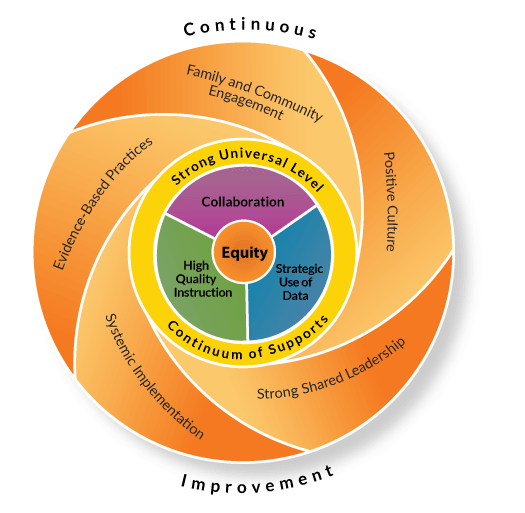
Wisconsin DPI. (2024). RTI Guidance Graphic. Wi.gov. https://dpi.wi.gov/sites/default/files/imce/sped/images/RtI-Guidance-graphic.png . connected to: Wisconsin’s Framework for an Equitable Multi-Level System of Support.
PACK-IT
Our Values

Passion comes in so many forms, and we want to honor those robust, strong emotions as they emerge – and give them a healthy direction to flow into. If we understand all behavior as communication, then we can see moments of escalation as opportunities for deeper learning – instead of flash points for tempers and misunderstanding.

Ability is the structural framework of skills and technique that help our students thrive. Some of these are standards set by our state governing boards, and some of them are strategic “tricks” to help students navigate the new hybrid world of multiple forms of media. Not all students can learn from lectures – Ability helps diversify their skillset.

More and more, Collaboration is King in the broader world. These days, it is more often about *who* you know and not *what* you know. Companies talk about “right fit” and “team-building” in ways that show their importance. Our students not only work together on various parts of learning, but also learn better strategies for working together – delegation, communication, and more.

It is crucial to develop our “kindness” muscles as we grow. Kindness is not being “nice”or people pleasing. Kindness involves speaking truthfully and honoring the inherent dignity and value in the person in front of you. It reflects a desire for how we want treat one another, and how we want our world to be.

Integrity matches who we are on the inside to how we act and interact in public spaces. Every human being is a leader – even if they are only leading themselves. Leadership has its roots and stability in Integrity – the practice of showing up consistently, with different facets of personality, skill, communication, and relationships *integrated* into our identity. When we practice Integrity, we invite accountability and growth.

Thoughtfulness means being mindful of ourselves, our community, our environment. It can be a pause before replying, it can be a moment of curiosity or inquisitiveness, and it can also be applying knowledge in new ways. When we are “thoughtful” or mindful, we activate our “metacognition” – the place in our brain where we embed our values and beliefs. Thoughtfulness also indicates a level of learning in which we can apply the knowledge to more than just data points. We can make connections, draw conclusions, and apply these things to our life.