
Accessibility
Why Individualized Education Plans Matter for Everyone.
What is an IEP?
An IEP is an individualized education plan for a student. It takes into account the student’s strengths, challenges, growth areas, and any limitations due to medical conditions or neurological differences. The key word here is PLAN.
Ideally, school is preparing students to live flourishing lives as adults in community. For students facing developmental delays, learning challenges, or medical conditions, the needs and resources can be drastically different than those of students who fit into a more “traditional” or industrial model. There are numerous benefits of individualized education planning:
Recognition of individuality and unique strengths and superpowers.
Custom-tailored resources and supports for those needs outside of what is typically expected of students.
Specific, measurable targets and goals that are assessed based on the unique student.
Regular opportunities (annually) to review and retool education plans to ensure that students are reaching their best and favorite selves.
Why does it matter?
Traditional education models were developed in time periods that were wildly different from today. Public education offered by government institutions evolved during an era that had minimal mass media communication, and zero internet. IEPs provide an opportunity to address the gap between traditional educational models, emerging research into neurodivergence and disability, and what constitutes a flourishing adult life. See WAC 392-172A-01175 for more information on “Special Education” and its purposes and goals.
What goes into an IEP?
guardian According to WA state guidelines, there is no designated process for an IEP; however, there are certain benchmarks that must be met. Check out the journey below to see how it may look for you or your student.
The benchmarks include:
| Formal request for evaluation – this can come from a parent, a teacher, a counselor, or the student themselves. (WAC 392-172A-03005) Schools are required to reply within 25 days. |
Consent of legal guardian or emancipated student (WAC 392-172A-03000)
|
Formal evaluation by counselor or trained professional (WAC 392-172A-03020) in accordance with WA State procedural safeguards and within 35 days of given consent. |
| Prior written notice for all parties: parents, educators, supplemental therapists and supports and student. | Procedural Safeguards – protecting Parent and Student Rights |
Evaluation Report (WAC 392-172A-03035) and determination of eligibility and consent to proceed. (WAC 392-172A-03040) |
|
Development of an appropriate plan incorporating all relevant findings from the evaluation and specifying evidence-based appropriate goals. (WAC 392-172A-03110) The IEP team must meet within 30 days of guardian consent for special education services to discuss the report and agree to implementation. |
Building a supportive IEP team to develop a plan and implement it. This can include (but is not limited to): SPED & Gen Ed teachers, parents, students, related services professionals, district representation, and any other relevant personnel. (WAC 392-172A-03090, WAC 392-172A-03095) | Access to “Related Services” (which can include OT, PT, SLT and more) (WAC 392-172A-01155) |
| Student is placed in the Least Restrictive Environment to support their education. (WAC 392-172A-03000) | Necessary support staff, curriculum, and educational resources are made available to the student and communicated to the guardians. | Regular Reviews (Annually) and Re-Evaluations (every 3 years WAC 392-172A-03015 and WAC 392-172A-03110) |


An individual with a disability is defined by the ADA as a person who has a physical or mental impairment that substantially limits one or more major life activities, a person who has a history or record of such an impairment, or a person who is perceived by others as having such an impairment.
An individual with a disability is defined by the ADA as a person who has a physical or mental impairment that substantially limits one or more major life activities, a person who has a history or record of such an impairment, or a person who is perceived by others as having such an impairment.
The Individuals with Disabilities Education Act (IDEA) is the nation’s federal special education law that ensures that public schools serve the educational needs of students with disabilities. IDEA includes specific provisions related to special education for students experiencing homelessness. Children and youth ages 3-21 receive special education and related services under IDEA Part B. Infants and toddlers ages birth-2 and their families receive early intervention services under IDEA part C.
Mobility and Long-Term Physical Disabiity Access
More and more, we are learning how creating accessible spaces for education offers dignity and opportunity for those who traditionally face unending challenges just trying to navigate life.
We keep 40″ of space in every aisle, allowing for different walking and movement aids to access all areas of our classrooms.
In partnership with licensed Physical, Occupational, and Mental Health Therapists, we design custom mobility modifications and aids that allow our students to participate fully in all of their classes.
With an eye to flexibility, prioritized seating as needed, and different aids to help those who are physically impaired, we welcome students from a variety of backgrounds and skillsets.
Modifications
A modification prioritizes demonstrating understanding of a specific target in whichever manner is appropriate for the student right in front of us.
Even as recently as 25 years ago, “southpaws” were chastized, forced to write with their non-dominant hand. Students are expected to perform on “standardized” multiple choice exams that focus more on how well students take tests than how much they’ve learned. The model of education as we’ve experienced it in the past is slowly passing away, making room for more expansive and creative opportunities for learning.
Providing modifications to assignments and learning assessments allows students to shine in those areas that spark curiosity and engagement. With an infinite encyclopedia of knowledge at our fingertips, learning *how* to access and use resources is even more critical than memorizing set data points.
Accommodations
“Accommodating” someone has gotten a bit tarnished as a phrase in recent years. The sense emerging is “I’m putting myxself out in order to accommodate your needs that I don’t care about or understand.” The reality behind accommodations is that our industry-driven world has failed regularly to provide spaces and resources that are accessible to those who are not within an arbitrarily determined “normal” criteria.
While this is slowly changing, accommodations are simply recognizing that someone has a limitation that prevents them from functioning within the current design. It is a radically compassionate and anti-survival-of-the-fittest strategy that invites everyone to the table.
Typical accommodations include sensory aids, stims, extra time on assignments, different methods of delivery, or even extra food/water/bathroom breaks. Acommodations benefit everyone.
PACK-IT
Our Values

Passion comes in so many forms, and we want to honor those robust, strong emotions as they emerge – and give them a healthy direction to flow into. If we understand all behavior as communication, then we can see moments of escalation as opportunities for deeper learning – instead of flash points for tempers and misunderstanding.

Ability is the structural framework of skills and technique that help our students thrive. Some of these are standards set by our state governing boards, and some of them are strategic “tricks” to help students navigate the new hybrid world of multiple forms of media. Not all students can learn from lectures – Ability helps diversify their skillset.

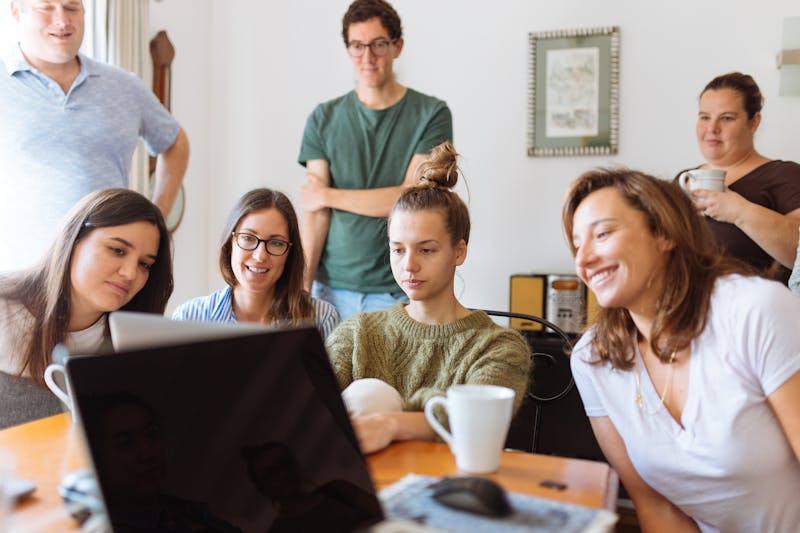
More and more, Collaboration is King in the broader world. These days, it is more often about *who* you know and not *what* you know. Companies talk about “right fit” and “team-building” in ways that show their importance. Our students not only work together on various parts of learning, but also learn better strategies for working together – delegation, communication, and more.

It is crucial to develop our “kindness” muscles as we grow. Kindness is not being “nice”or people pleasing. Kindness involves speaking truthfully and honoring the inherent dignity and value in the person in front of you. It reflects a desire for how we want treat one another, and how we want our world to be.

Integrity matches who we are on the inside to how we act and interact in public spaces. Every human being is a leader – even if they are only leading themselves. Leadership has its roots and stability in Integrity – the practice of showing up consistently, with different facets of personality, skill, communication, and relationships *integrated* into our identity. When we practice Integrity, we invite accountability and growth.

Thoughtfulness means being mindful of ourselves, our community, our environment. It can be a pause before replying, it can be a moment of curiosity or inquisitiveness, and it can also be applying knowledge in new ways. When we are “thoughtful” or mindful, we activate our “metacognition” – the place in our brain where we embed our values and beliefs. Thoughtfulness also indicates a level of learning in which we can apply the knowledge to more than just data points. We can make connections, draw conclusions, and apply these things to our life.